

Ground telemetry
Complete best-in-class ground telemetry equipment: receive tracking antennas, receivers, recorders, processors, and a central Manager. Systems can be fixed, mobile, or shipborne; they scale from single stations to multi‑site ranges with redundant links and best‑source selection. We enable high-fidelity real‑time decision‑making and post‑flight analysis.
Onboard telemetry
Rugged, flight‑proven onboard telemetry that acquires, encodes, records, and transmits critical flight‑test data with high fidelity to ground stations. Built for L/S/C‑band operation, power‑scalable links, and harsh environments (including supersonic regimes), while complying with international telemetry standards (IRIG‑106 family).
Central manager
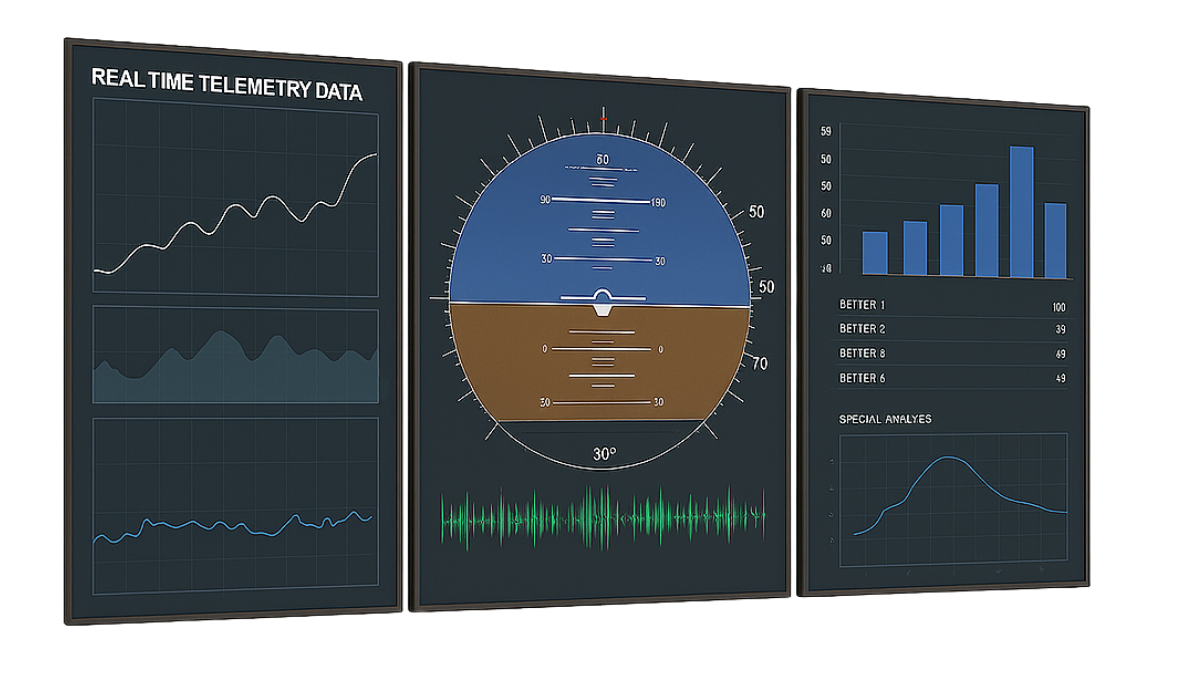
- Unified command of antennas, receivers, recorders, and best‑source selectors from a single console, local or remote.
- Time discipline & geo‑awareness (IRIG‑B, GNSS/compass/IMU inputs) for consistent pointing and correlation across sites.
- Ethernet‑based control enables unattended stations, shipborne use, and rapid deployment in shelters or containers.
- Redundancy & continuity via automatic source switching and multi‑station federation to close coverage gaps.
- APIs/automation hooks for range C2 integration and scripted test procedures.
Mobile ground stations
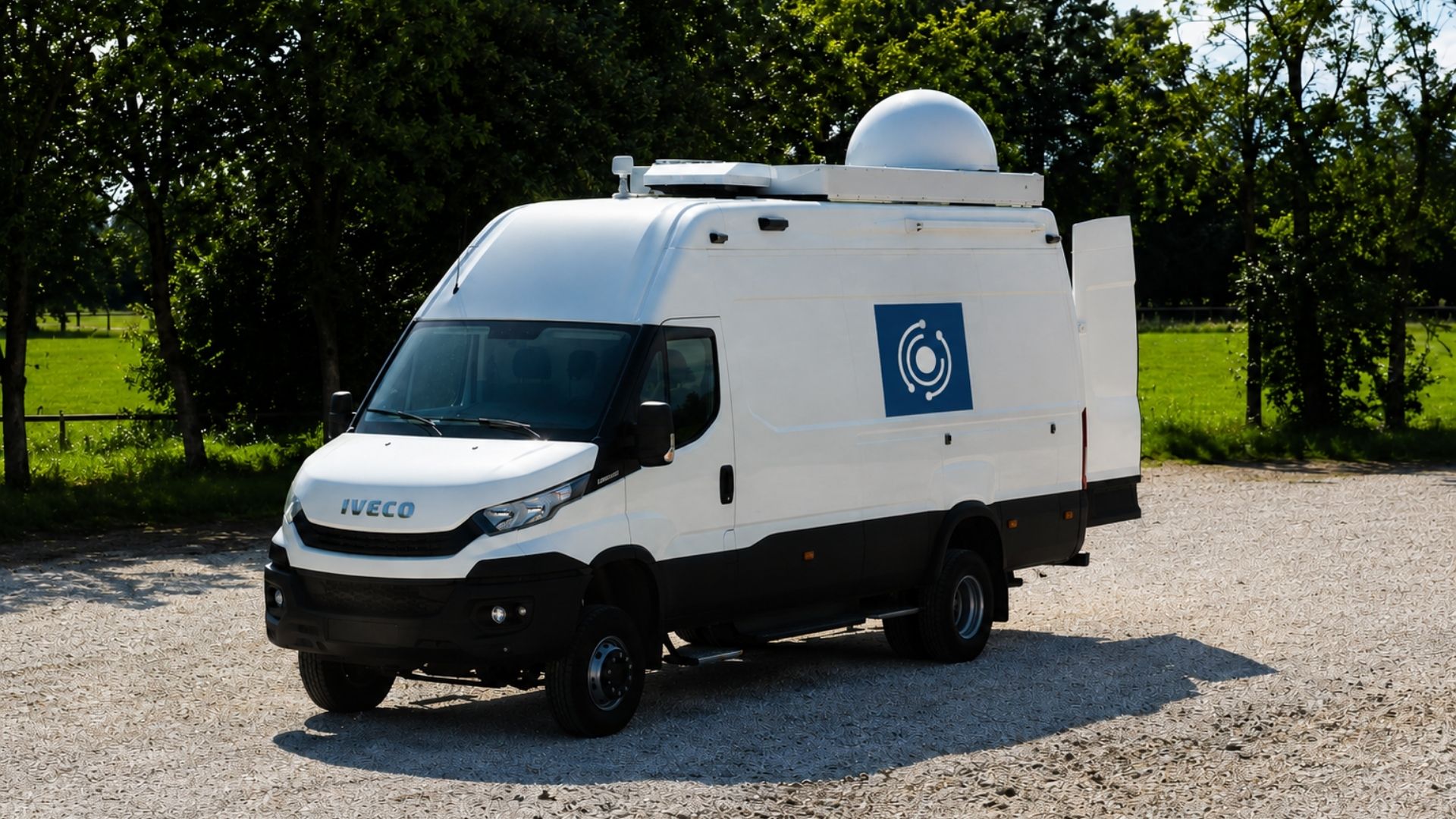
- Two deployment formats: a trailer-mounted tracking antenna that pairs with your existing ground chain, and a fully integrated telemetry vehicle carrying antenna, processing racks and operator consoles.
- The vehicle-integrated station puts the complete chain — receive tracking antenna, receivers, recorders, processors and operator positions — in a single unit, so a range team is operational shortly after arrival without external infrastructure.
- The trailer variant is towable by a standard vehicle and suits campaigns where the processing and control equipment is already on site or housed elsewhere.
- Same equipment and standards as our fixed stations: L/S/C-band reception, IRIG-106 compliance, redundant links and best-source selection across multiple receive points.
- Built for field conditions and for multi-site ranges: a mobile station can work standalone or as an additional receive site reporting into a central Manager.
Processors
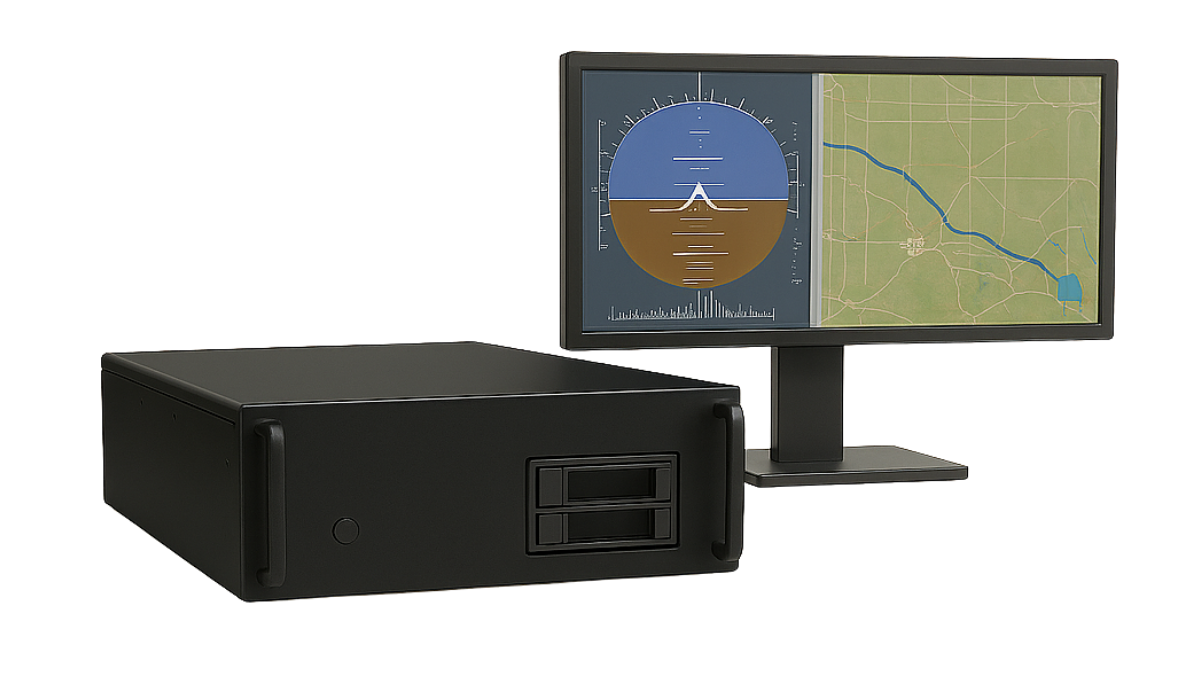
- Frame sync, decommutation, and conversion (logic, polynomials, DLLs) including IRIG‑106 Ch.7 demux.
- Network‑centric ingest of UDP/Ch.10 streams (plus hybrid PCM inputs) for flexible, COTS‑only deployments.
- Real‑time alarms & visualization with configurable dashboards for flight‑test engineers and mission control.
- Data storage & broadcast to auxiliary displays and analysis stations, supporting both live and post‑flight workflows.
- Laptop to rack‑scale—the same toolchain runs on portable setups or fully redundant server rooms.
Receive tracking antennas
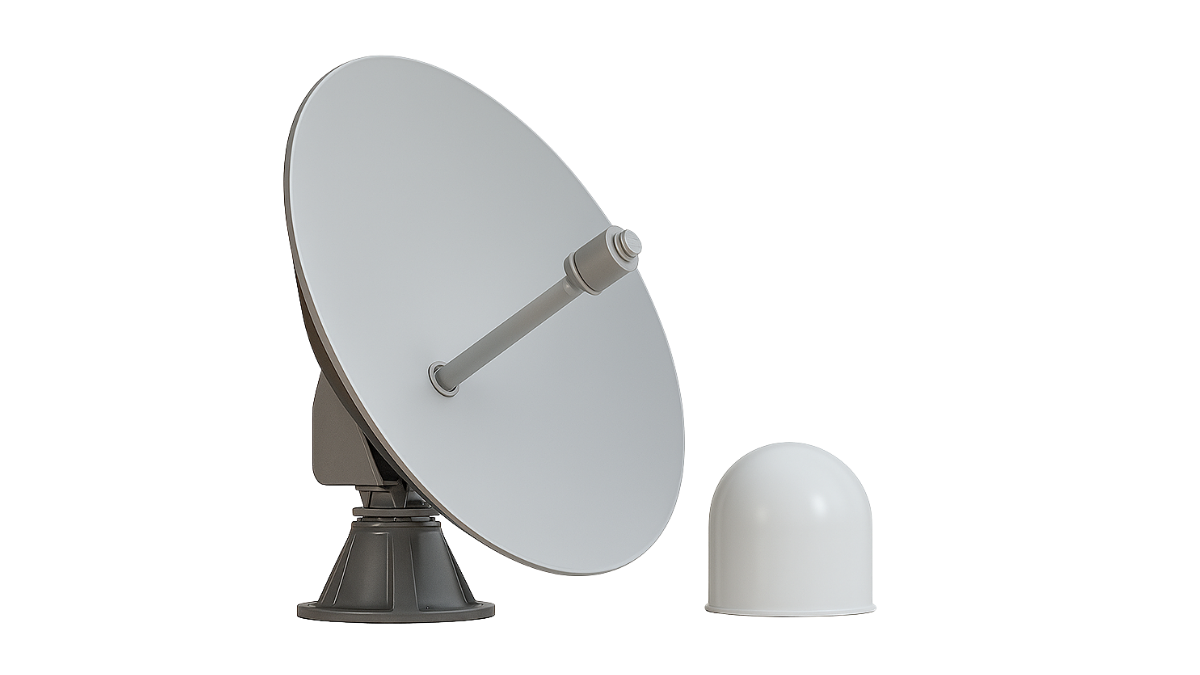
- High‑gain, multi‑band (L/S/C) reception with options from compact, mobile units to large dual‑axis systems for long‑range, high‑dynamics tracking.
- Fast azimuth/elevation servos and monopulse/assisted acquisition modes maintain lock on agile targets (including hypersonic profiles).
- Ruggedized radome designs (IP‑rated) for rain, dust, sand, and extended temperature ranges; containerized and trailer/skid variants available.
- Ethernet/IP control with GNSS/compass inputs supports unmanned remote stations and shipborne stabilization.
- Scalable apertures (from <1 m class to >10 m) to optimize G/T and beamwidth for range geometry and acquisition strategy.
Receivers
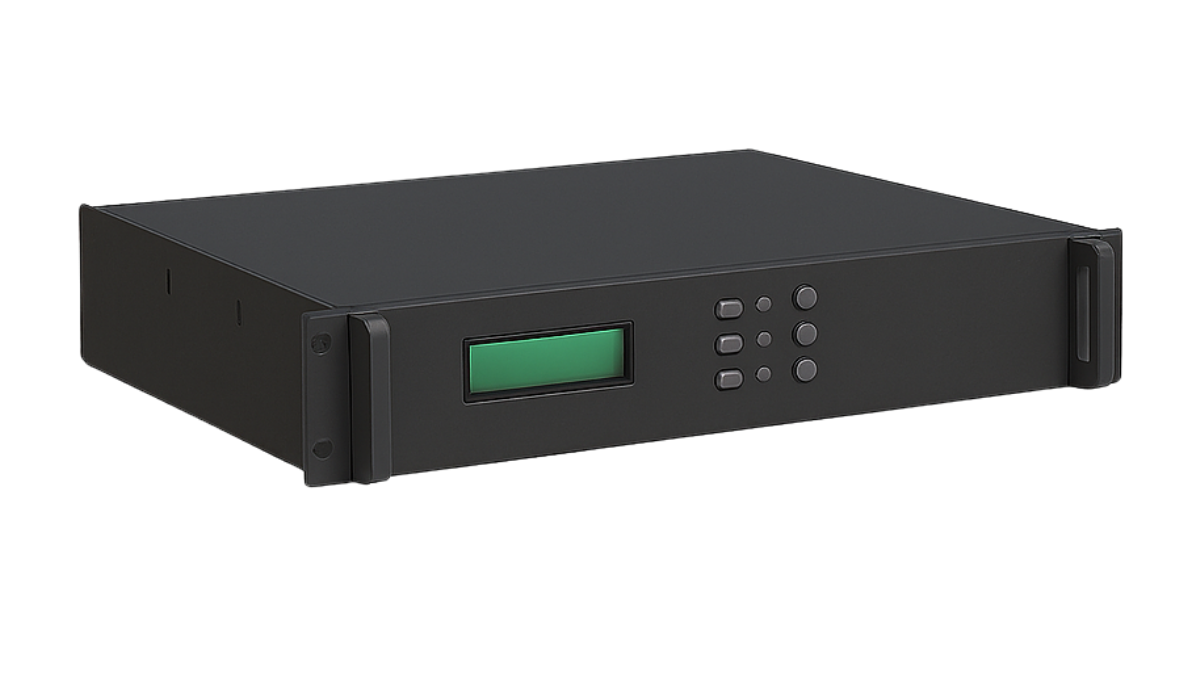
- All TM bands & modulations (e.g., PCM‑FM, MSK/SOQPSK, COFDM, STC; IRIG‑218‑20 compliant) with advanced equalization for weak/faded links.
- Multi‑channel architectures (1–4+) with pre‑/post‑D combining and high dynamic‑range RF design for robust operation.
- Integrated tools such as wideband spectrum viewing and built‑in signal generation to speed bring‑up and troubleshooting.
- Embedded recording/replay options reduce external wiring and enable rapid test turnaround.
- Local/remote GUI over Ethernet for centralized configuration, monitoring, and automation.

Recorders
- High‑throughput PCM capture up to ~800 Mb/s with support for dozens of concurrent PCM streams in modular chassis.
- IRIG‑106 Chapter 10 recording with Chapter 7 demux, enabling seamless handling of video, buses, and sensor data.
- Media flexibility (HDDs/cartridges) and on‑board/ground replay to accelerate debrief and anomaly resolution.
- Browser‑based remote control and health/status for distributed ranges and unattended shelters.
- Clean gatewaying between PCM and Ethernet to simplify integration and data dissemination.
Airborne recorders (IRIG-B Chapter 10)
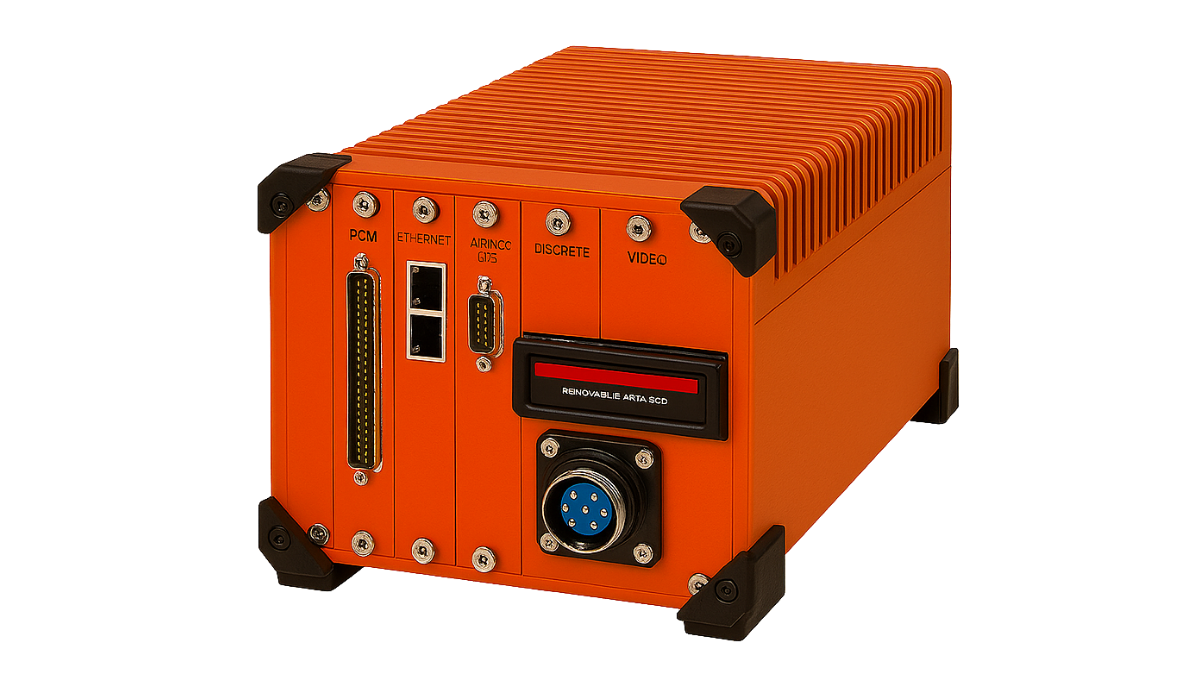
- Captures the bus stream locally in Chapter 10 format for post‑flight analysis.
- Contains a range of signal interface modules, for various data sources and bus types (PCM, Ethernet, ARINC 429, MIL-STD-
- 1553, CAN, analog, video, serial, discrete, etc.).
- Supports synchronized time‑tagging across sources.
- Solid‑state storage for reliability in high‑G/vibration environments.
- Quick‑turn data offload to lab analysis tools
Bus streaming and encoding
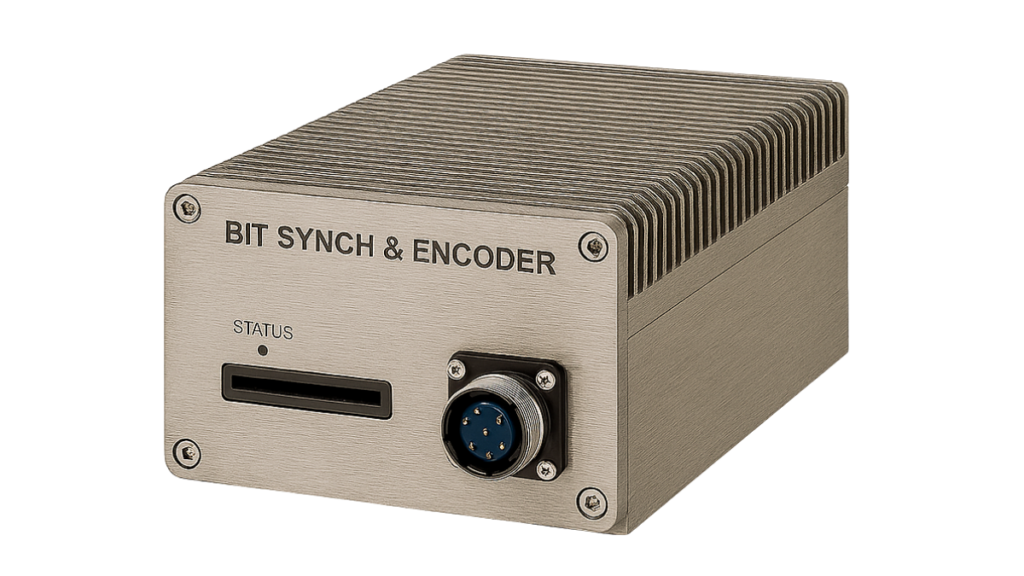
- IRIG‑106 Chapter 4 (PCM) as the most common real‑time stream.
- IRIG‑106 Chapter 7 options for packetized streaming.
- Integrated bit synchronization & encoding for robust links.
- Configurable data rates and framing for link‑budget optimization.
- Built to maintain data integrity through the full transmit chain.
Data Acquisition Units (DAUs)
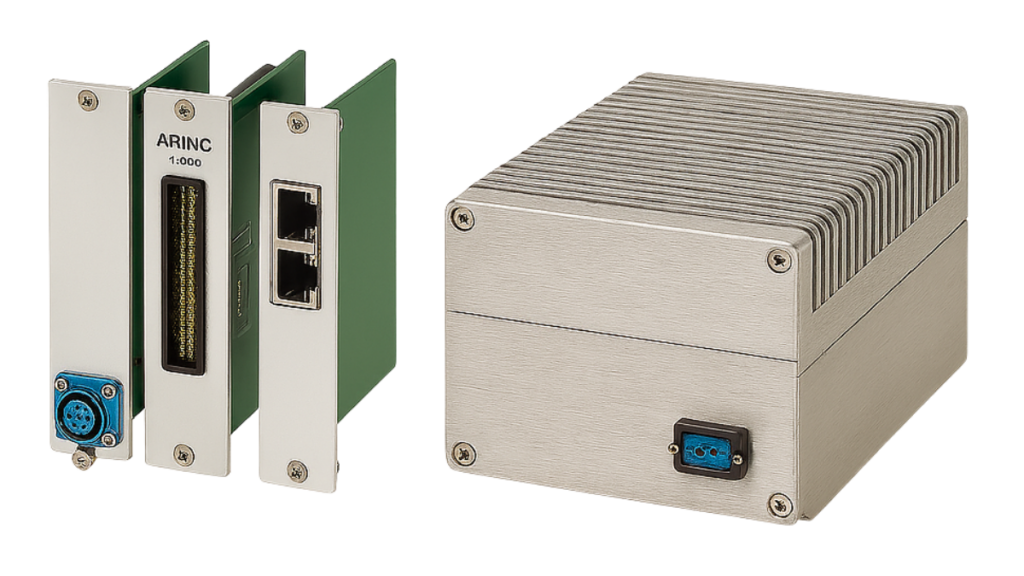
- Configurable chassis with multiple I/O boards in order to drive the required sensors (e.g., IMUs, accelerometers, Pitot tubes, etc..) and databus formats (e.g., ARINC‑429, MIL‑STD‑1553, Ethernet, AFDX, RS‑232/422, etc.).
- Multiplexes multi‑sensor inputs into a unified output stream.
- Onboard sensor management: power, data conditioning, and health checks.
- Scalable from single DAU to multi‑node FTI networks.
- Designed for shock/vibration profiles in demanding flight tests.
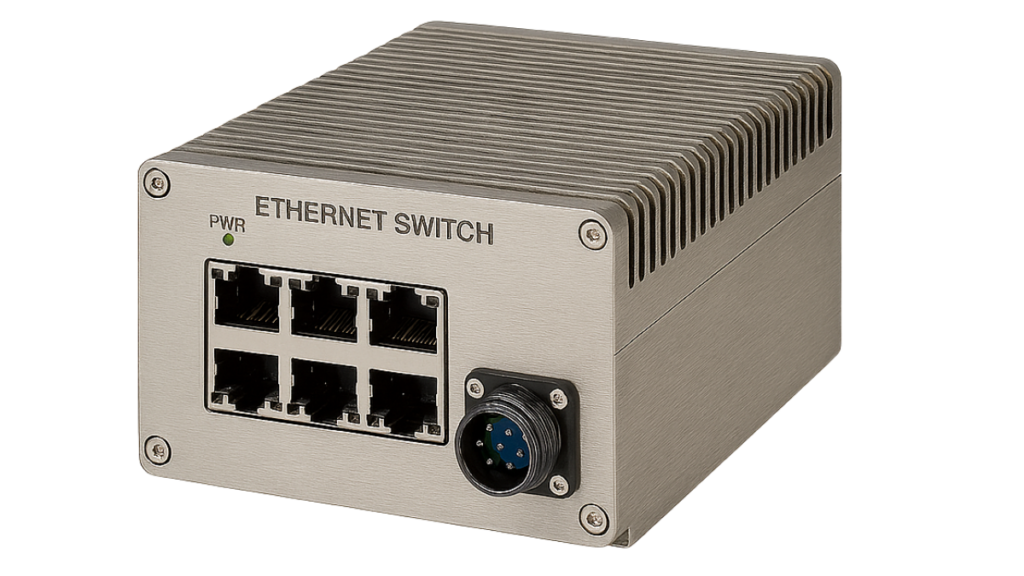
Onboard switches
- Combines multiple DAU outputs and other payload streams on the aircraft bus.
- Deterministic aggregation for time‑aligned data delivery.
- Flexible topologies (star/chain) to suit installation constraints.
- Supports mixed interfaces common in FTI (e.g., PCM/Ethernet/serial).
- Designed to interwork with downstream recorders and RF encoders.

Power Supply & Distribution
- Centralised or distributed power for all chain elements.
- Input filtering and protections for platform transients.
- Redundancy options for mission‑critical phases.
- Designed to meet flight‑test safety and EMC constraints.
- Supports battery‑backed operation if required.
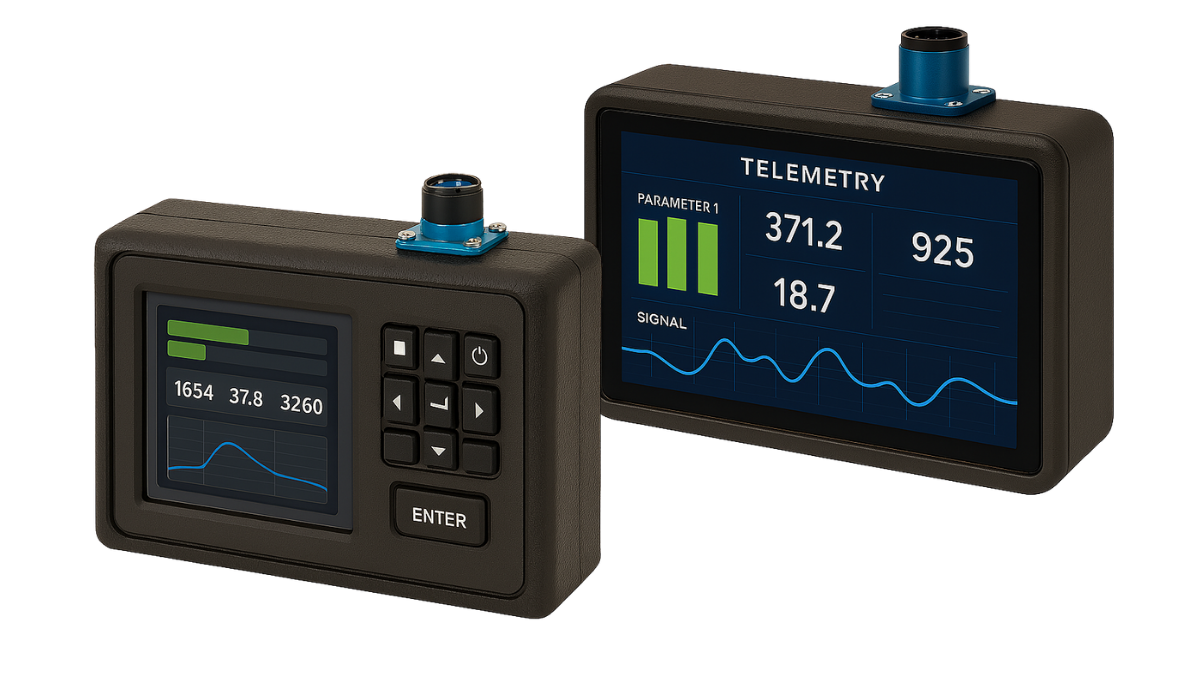
Real‑Time Airborne Displays
- In‑flight visualisation of key parameters for FTI campaign crew or test engineers.
- Alarm thresholds to flag out‑of‑family behavior.
- Configurable pages for different mission phases.
- Interfaces directly with the onboard databus.
- Lightweight, low‑power options for space‑constrained installations.
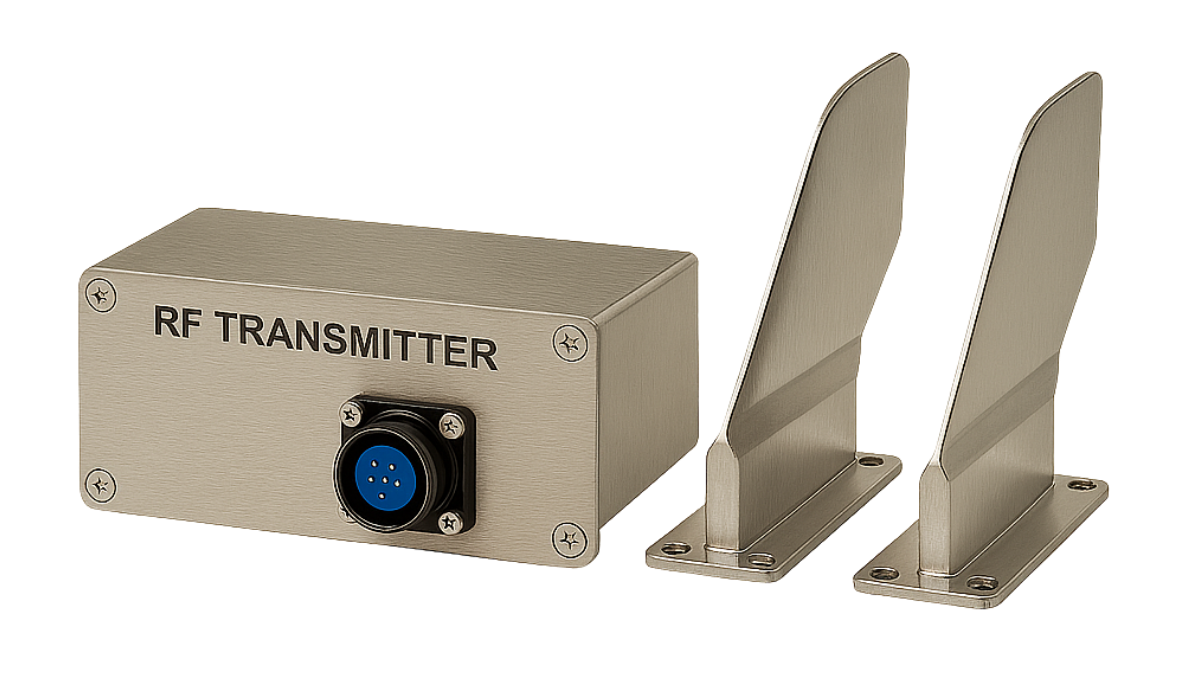
RF Transmitters & Antennas
- L/S/C‑band operation with selectable output power and modulation profiles.
- Diversity using multiple transmitters/antennas with different polarizations and carriers.
- High‑integrity air‑to‑ground link to range ground receivers.
- Built for thermal, shock, and vibration flight conditions (including supersonic flights).
- Compact form factors for test vehicles (UAVs, aircraft, helicopters, rockets, missiles, etc.).
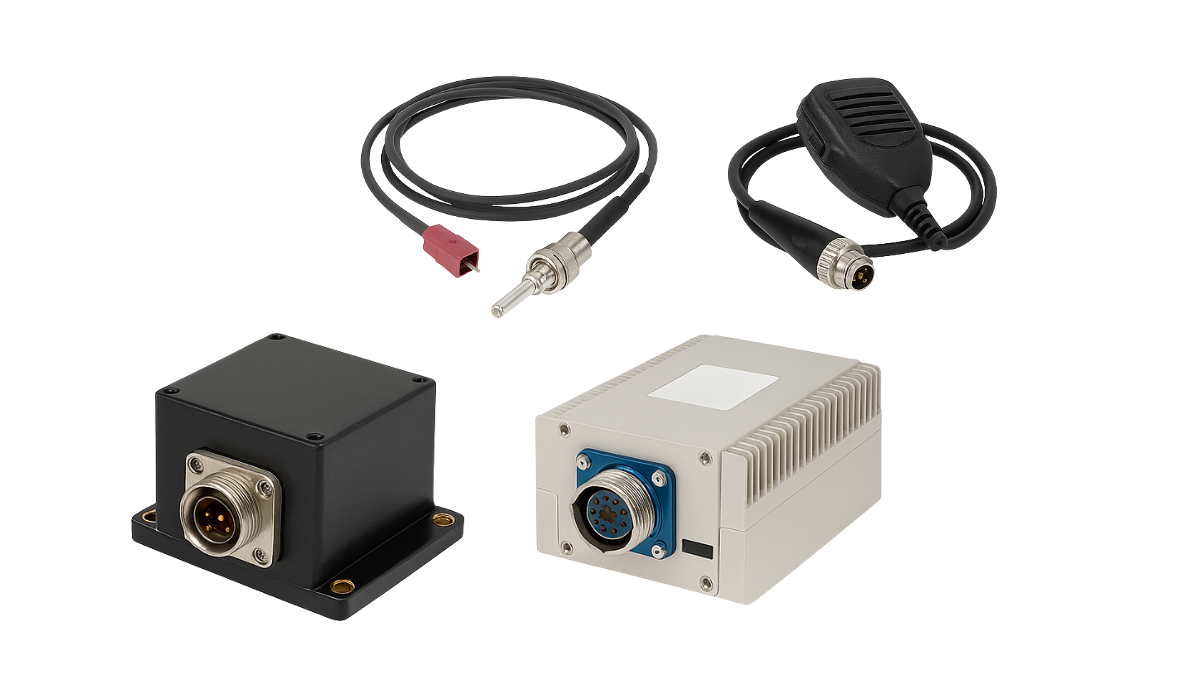
Sensors & Signal Conditioning
- Supports a wide range of mixed measurements: temperature, analog, discrete, vibration, accelerometers, voice, etc.
- Modular signal conditioning for diverse sensor types and ranges.
- Stable timing reference for synchronized sampling across the test vehicle.
- EMI/EMC‑aware design for clean, low‑noise acquisition on test vehicles.
- Ready for integration into distributed FTI networks.